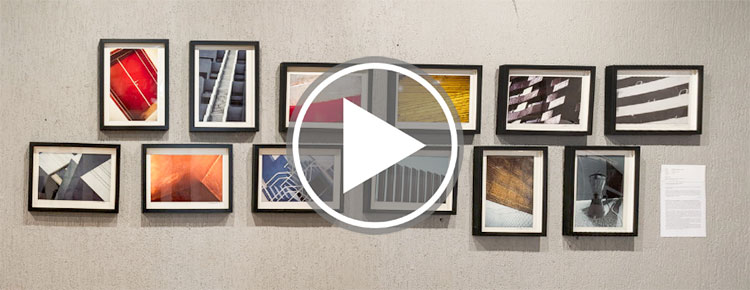
Photography is a language that runs across the skin of things.
It is the photographer’s gaze that, through the still image, pierces the superficiality of an encounter, gives it depth and produces a testimony that represents a new reality.
Photography operates in a vital and paradoxical way within a genre known in painting as still life. In other words, it cuts a fragment of reality away from its broader context: the photographer selects it, gives it prominence and, through a personal iconographic narrative, synthesises their encounter with the world.
Carlo Maria Causati is a photographer whose work has a strong affinity with the world of art. He has always made a personal use of what lies behind photography’s visible splendour: the darkroom. The darkroom is Causati’s personal space, where he develops an unprecedented encounter with reality.
Causati rescues lived experience from its “insignificance”, from its inert space, in order to develop a vision closely connected to artistic expression. In doing so, he confirms that photography has, in its own right, become a fully recognised language within the history of art.
Causati’s cultural nomadism also shapes the behaviour of his audience, drawing viewers into a silent journey, a wandering that stimulates both the sensitivity of the gaze and the mind’s investigative potential.
As in any labyrinth, there is no narrative plot here, no linear progression to guide the viewer from entrance to exit. Instead, there is a palpable sense of wandering, intended to elevate photography into a vehicle for an inner journey, in which the conventional, superficial gaze—the one that accompanies us along our urban journeys—is compelled to expand into a more complex and exploratory way of seeing and knowing.
Achille Bonito Oliva
|